Ice Systems

Luxury Ice Maker Repair in NYC

Reliable ice production is essential for premium kitchens and entertaining spaces. We handle built-in and undercounter systems from Sub-Zero, Scotsman, and U-Line as well as Samsung, LG, GE, and KitchenAid.

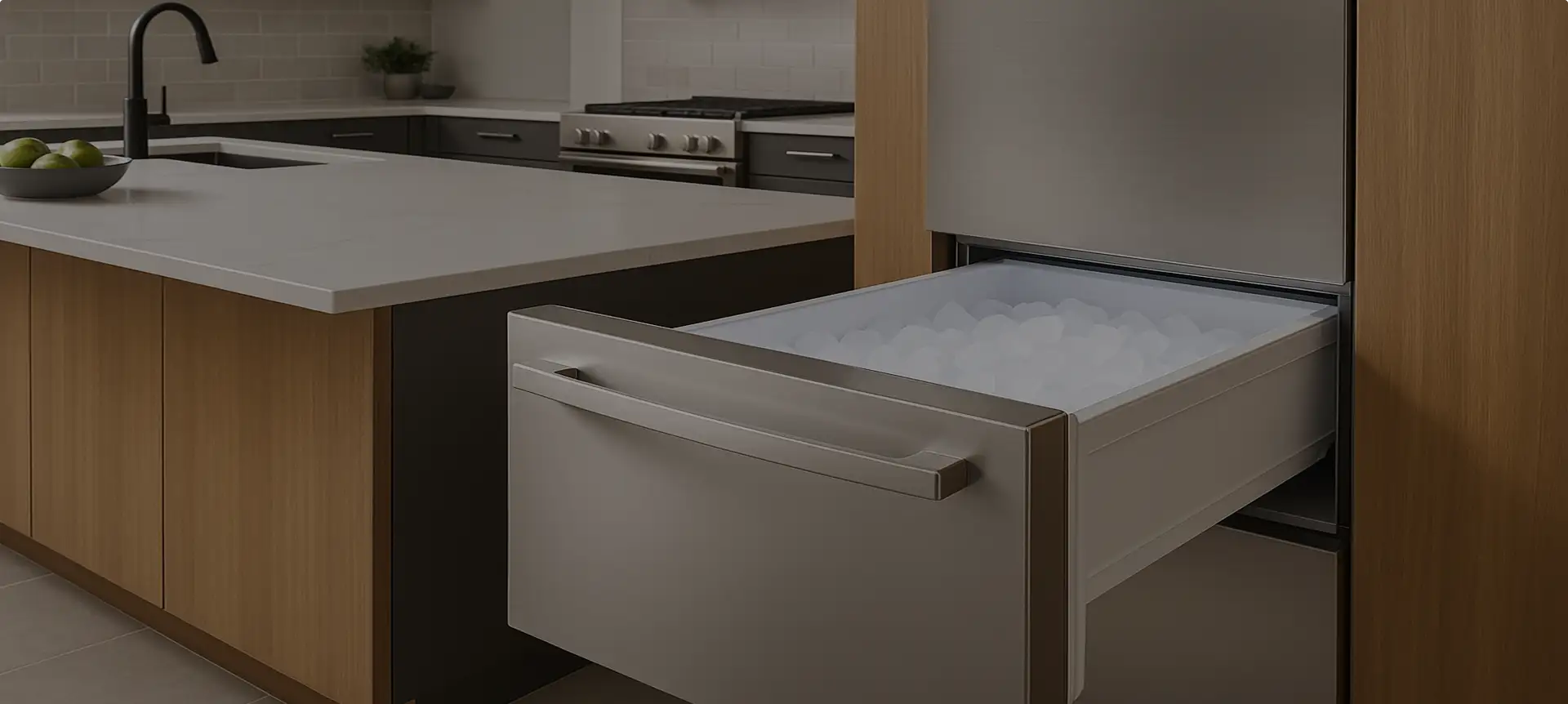
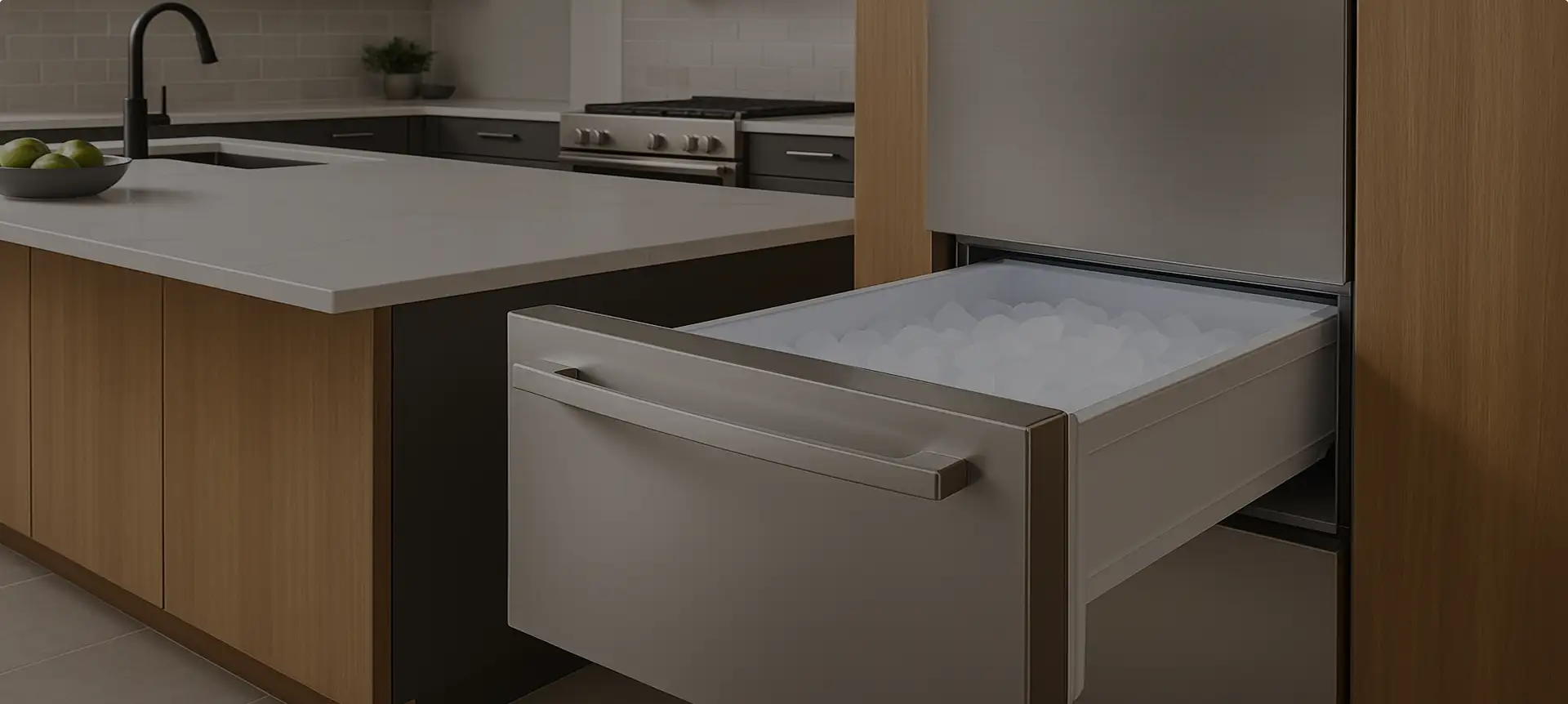
Built-in ice maker repair service for luxury kitchens in NYC

Ice Maker Problems We Diagnose

Built-in ice maker repair and maintenance service by NYC Sub-Zero & Viking Appliance Repair in New York City
  • No ice production despite cooling operation.
  • Slow output, small cubes, or hollow cube quality.
  • Fill valve, filter, and water pressure issues.
  • Harvest cycle stalls and bin sensor faults.
  • Leak events around inlet, line, or drain path.

Sub-Zero Undercounter Ice Makers: UC-15I Series Diagnostics and Repair

The Sub-Zero UC-15I series undercounter ice maker is the standard-bearer for built-in ice production in luxury NYC kitchens. These units produce up to 50 pounds of clear, restaurant-quality ice per day using a gravity-fed water system and a precision-timed harvest cycle that creates uniformly shaped crescent or half-cube ice. The UC-15I features a stainless steel evaporator plate where water is sprayed in a thin film, frozen layer by layer, and then released by a brief heating cycle that warms the plate just enough to loosen the ice slab before an ejector mechanism breaks it into individual cubes and deposits them into the insulated storage bin. When this process breaks down, the result is no ice, partial cubes, cloudy cubes, or a unit that runs continuously without filling the bin.

Common UC-15I diagnostic scenarios include the water inlet valve failing to open, which prevents any water from reaching the evaporator plate. This valve is a solenoid-operated device that requires a minimum water supply pressure of 20 PSI to operate correctly. In older NYC buildings where water pressure can drop below this threshold during peak usage hours, the valve may open intermittently or fail to fill the water reservoir completely, resulting in thin ice sheets that break apart rather than forming solid cubes. Our technicians measure the supply pressure with a gauge at the valve inlet, test the solenoid coil resistance with a multimeter, and inspect the inlet screen filter for sediment that can restrict flow even when pressure is adequate.

The harvest cycle on the UC-15I is controlled by a timer and a thermostat that work together to determine when the ice on the evaporator plate has reached the proper thickness. If the harvest thermostat fails or drifts out of calibration, the unit may attempt to harvest too early, producing thin, fragile cubes, or too late, producing an ice slab that is too thick for the ejector mechanism to break apart. We calibrate the harvest timing by observing a complete freeze and harvest cycle, measuring the ice thickness against the Sub-Zero specification, and adjusting or replacing the thermostat to restore the correct harvest point.

Scotsman and U-Line Built-In Ice Machine Service

Scotsman ice machines are widely used in high-end NYC kitchens, home bars, and entertainment spaces for their commercial-grade reliability and their ability to produce large volumes of ice in a compact undercounter format. Scotsman models such as the CU50 and the Brilliance series use a vertical evaporator plate where water cascades over the freezing surface from a distribution header at the top. As ice forms on the plate, a thickness probe senses when the cubes have reached the correct size and initiates the harvest cycle by reversing the refrigeration cycle to deliver warm gas through the evaporator, releasing the ice into the bin below. When the thickness probe becomes coated with mineral scale from NYC's moderately hard water, it loses sensitivity and can cause premature or delayed harvesting, producing cubes that are either too small and hollow or oversized and clumped together.

U-Line built-in ice makers, including the popular BI-2115 and ADA15IM series, are valued for their quiet operation and their ability to integrate seamlessly into residential cabinetry. U-Line units use a horizontal evaporator grid rather than a plate, creating individual cube cavities that produce well-defined, consistent cube shapes. Common U-Line service issues include the water pump motor failing to circulate water over the evaporator grid, the bin thermostat signaling the control board that the bin is full when it is not, and the hot gas solenoid valve leaking internally, which allows a small amount of warm refrigerant gas to enter the evaporator during the freeze cycle, dramatically slowing ice production. Our technicians test the pump motor for proper voltage and amp draw, verify the bin thermostat signal with the bin both empty and full, and check the hot gas valve for internal leakage using discharge line temperature measurements.

Water Inlet Valve Failure, Harvest Cycle Problems, and Bin Sensor Malfunction

The water inlet valve is the gateway component that controls the flow of fresh water into the ice maker. It must open reliably when the control board sends a fill signal and close completely when the fill is complete. A valve that fails to open halts ice production entirely. A valve that fails to close fully can flood the evaporator plate, overflowing water into the bin and creating a slushy mess rather than solid cubes. In NYC buildings, the most common cause of inlet valve problems is mineral deposits from the water supply accumulating on the valve seat and diaphragm, preventing a clean seal. Our technicians inspect the valve internally when possible, replace the valve assembly with an OEM component when the seat is scored or the diaphragm is deformed, and install a sediment filter upstream of the valve to protect it from future deposit buildup.

Harvest cycle problems are the most nuanced ice maker repairs because the harvest involves a precisely timed interaction between the refrigeration system, the electrical control, and the mechanical ejection components. During harvest, the control board reverses the compressor's output or activates a hot gas solenoid to send warm refrigerant through the evaporator, loosening the ice from the freezing surface. Simultaneously, a mechanical ejector, typically a set of rotating fingers, a sliding plate, or a water curtain, pushes the loosened ice into the storage bin. If the harvest heating is insufficient, the ice sticks to the evaporator and the ejector cannot move it, causing a jam. If the heating runs too long, the cubes melt partially and refreeze into clumps in the bin. Our technicians use infrared thermometers to monitor the evaporator surface temperature throughout the harvest cycle, comparing the readings to the manufacturer's specification to identify heating deficiencies or excesses.

The bin sensor, also called the bin thermostat or bin level switch, tells the control board when the ice storage bin is full so the unit can stop making ice and avoid overflow. Different brands use different sensing methods: Sub-Zero uses a thermistor that detects the cold temperature of ice contacting it, Scotsman uses a mechanical arm that rides on top of the ice pile, and U-Line uses a combination of temperature and optical sensing. When the bin sensor malfunctions, the ice maker either runs continuously and overfills the bin, pushing ice out of the unit and onto the floor, or it stops production prematurely when the bin is only partially full. Our technicians identify the sensor type, test its operation with a controlled stimulus, and replace it with the correct OEM part to restore accurate bin level detection.

Water Filtration System Maintenance and Replacement for Ice Makers

Water quality has a direct and significant impact on both the clarity of the ice and the longevity of the ice maker's internal components. NYC tap water, while generally safe and well-regulated, contains varying levels of chlorine, sediment, and dissolved minerals depending on the borough, the building's plumbing age, and the distance from the water treatment facility. These contaminants affect ice in several ways: chlorine produces off-tastes and odors, sediment clogs the inlet valve and distribution system, and minerals cause scale buildup on the evaporator surface that insulates against heat transfer and reduces production capacity.

Most luxury undercounter ice makers are designed to work with an inline water filtration system that reduces chlorine taste, sediment particles, and in some cases dissolved minerals before the water reaches the ice maker. Sub-Zero recommends their proprietary water filter for the UC-15I series, and Scotsman specifies a filter with a minimum sediment rating of 5 microns and a chlorine reduction capacity of at least 2,000 gallons. The filter cartridge has a finite lifespan, typically six months or 750 gallons, whichever comes first, and must be replaced on schedule to maintain filtration effectiveness. Our technicians check the filter installation during every ice maker service call, verify that the correct filter type is installed, replace expired cartridges, and flush the system after filter changes to remove any carbon fines that could enter the ice maker.

For NYC clients who are concerned about water hardness and its impact on ice maker performance, we can install or recommend a point-of-use water softening cartridge in addition to the standard sediment and carbon filter. This dual-filtration approach addresses both the taste and clarity concerns and the scale buildup concern, providing the cleanest possible water to the ice making system and minimizing the frequency of evaporator cleaning and descaling service.

Slow Ice Production: Water Pressure, Ambient Temperature, and Condenser Cleaning

Slow ice production is one of the most common complaints from owners of built-in ice makers, and the cause is often environmental rather than a component failure. The three primary environmental factors that affect ice production rate are water supply pressure, ambient room temperature, and condenser cleanliness. Water pressure below the manufacturer's minimum specification, typically 20 to 40 PSI depending on the brand, results in an insufficient water volume reaching the evaporator during each fill cycle. This produces thinner cubes that take longer to freeze and yield less ice per batch. In NYC high-rise buildings, water pressure on upper floors can be significantly lower than at street level, especially during morning and evening peak usage periods. Our technicians measure the dynamic water pressure at the ice maker inlet while the valve is open and flowing to determine the actual operating pressure, which can differ substantially from the static pressure reading.

Ambient temperature around the ice maker affects production because the condenser must reject the heat absorbed during the freezing process into the surrounding air. If the room temperature exceeds the manufacturer's rated ambient maximum, typically 100 to 110 degrees Fahrenheit, the condenser cannot reject heat efficiently, and the entire refrigeration cycle slows down. While room temperatures in NYC kitchens rarely reach these extremes, a built-in ice maker installed in a tight cabinet with poor ventilation can experience localized ambient temperatures well above the room average due to heat trapped behind the unit. We measure the temperature in the cabinet space surrounding the ice maker and compare it to the manufacturer's rating, recommending ventilation improvements when the trapped-air temperature exceeds the safe operating range.

Condenser cleaning is the single most effective maintenance action for restoring ice production performance. The condenser on a built-in ice maker is typically a coil or a flat finned surface located at the rear or bottom of the unit. In NYC apartments, dust, kitchen grease aerosol, and pet hair accumulate on the condenser rapidly, forming an insulating layer that reduces heat transfer. A condenser with even a moderate coating of debris can reduce ice production by 20 to 30 percent while simultaneously increasing energy consumption and compressor wear. Our technicians clean the condenser using a combination of brushing, vacuuming, and compressed air, taking care not to bend the delicate fins that must remain straight for optimal airflow.

Clear Ice vs. Nugget Ice Machines: Technology, Maintenance, and Selection

The type of ice a machine produces depends on its freezing technology, and understanding the difference is important when selecting a unit or diagnosing performance issues. Clear ice machines, used in Sub-Zero, Scotsman, and most U-Line models, produce transparent cubes by flowing water over a freezing surface and allowing impurities and air bubbles to be washed away with the unfrozen water. The resulting ice is dense, slow-melting, and visually appealing, making it the preferred choice for cocktails and fine dining. The flowing-water freezing process requires a water circulation pump, a spray nozzle or distribution header, and a drain for the waste water that carries away impurities. Each of these components requires periodic service to maintain the clarity and quality of the ice.

Nugget ice machines, also called pellet or sonic ice machines, produce small, chewable ice pieces by scraping frozen ice from the inside of a cylindrical evaporator and compressing it through an extrusion head. Brands like Scotsman offer residential nugget ice makers that are popular with homeowners who prefer the soft, chewable texture. Nugget machines have different maintenance needs than clear ice machines: they do not require a water circulation pump, but the auger mechanism that scrapes and compresses the ice can wear over time, and the extrusion head can become clogged with scale. Our technicians service both clear and nugget ice machines, understanding the distinct mechanical and refrigeration systems each type employs.

Regardless of the ice type, all built-in ice machines benefit from periodic sanitization to prevent bacterial growth in the water distribution system, the storage bin, and the evaporator surface. We use food-safe sanitizing solutions approved by the machine manufacturers and follow their specified cleaning protocols. For NYC clients who entertain frequently and rely on their ice maker for daily use, we recommend a professional cleaning and sanitization service every six months to maintain food safety and ice quality standards.

Ice Maker Diagnostic Reference Table

Problem Common Causes Diagnostic Steps Recommended Fix
No ice production, unit running Water inlet valve not opening, water supply turned off, frozen water line, clogged filter Verify water supply valve is open, test inlet valve solenoid, inspect line for ice blockage, check filter status Replace inlet valve, thaw frozen line, replace clogged filter, restore water supply
Small, thin, or hollow cubes Low water pressure, partially clogged inlet screen, harvest timer too fast, warm water supply Measure dynamic water pressure at valve, clean inlet screen, observe harvest cycle timing, test water temperature Correct water pressure issue, clean or replace valve screen, adjust harvest timing
Cloudy or white ice cubes Water filtration exhausted, high mineral content in water, circulation pump not working properly Check filter replacement date, test water TDS, verify pump operation and water flow over evaporator Replace filter, install water softener if needed, service circulation pump
Ice maker runs but never harvests Harvest thermostat failed, hot gas solenoid not opening, harvest motor seized, control board failure Monitor evaporator temperature through freeze cycle, test hot gas valve solenoid, check harvest motor voltage Replace harvest thermostat, hot gas solenoid valve, or harvest motor as identified
Unit keeps making ice, bin overflows Bin sensor failure, bin thermostat out of range, sensor wire disconnected Test bin sensor with ice contact and empty bin, inspect wiring, verify sensor signal reaches control board Replace bin sensor or thermostat, repair wiring connection
Water leaking from unit Cracked water reservoir, loose inlet fitting, overflow from harvest cycle, drain line obstruction Inspect reservoir for cracks, check all water connections for tightness, observe harvest for overflow, verify drain path Replace reservoir, tighten fittings, adjust harvest parameters, clear drain line

NYC Water Quality and Building Water Pressure: Impact on Ice Maker Performance

New York City's water supply comes from a protected watershed system in the Catskill Mountains and Delaware River basin, and it is among the highest quality municipal water in the United States. However, by the time this water reaches the tap in a Manhattan high-rise or a Brooklyn brownstone, it has traveled through miles of distribution mains, building risers, and interior piping that can introduce sediment, pipe corrosion particles, and varying levels of dissolved minerals. The age and material of the building's internal plumbing have the greatest impact on the water quality at the ice maker inlet: older buildings with galvanized steel pipes can deliver water with elevated iron content that produces rust-colored staining on ice and inside the ice maker, while buildings with copper piping may have higher mineral levels that accelerate scale formation on the evaporator.

Water pressure in NYC buildings is affected by the building's height, the type of water delivery system (gravity tank, hydro-pneumatic booster, or direct city pressure), and the demand from other units on the same riser. High-rise buildings above six stories typically use a rooftop gravity tank or a booster pump system to deliver adequate pressure to upper floors. During peak demand periods, the pressure at the ice maker inlet can drop below the minimum specification, causing fill cycle timeouts, partial fills, and thin ice production. Our technicians measure the dynamic water pressure at multiple times during a service call and can recommend a booster pump or pressure regulator installation if the building supply consistently falls below the ice maker's requirements.

Frequently Asked Questions: Luxury Ice Maker Repair in NYC

Why is my Sub-Zero ice maker producing small or hollow cubes?

Small or hollow ice cubes from a Sub-Zero UC-15I are most commonly caused by insufficient water supply to the evaporator plate. This can result from low building water pressure, a partially clogged inlet valve screen, a water filter that has reached its capacity and is restricting flow, or a water supply line that is kinked or partially frozen. Our technicians measure the water pressure at the valve while it is flowing, inspect the filter and inlet screen, and evaluate the supply line routing to identify and correct the cause. In many NYC high-rise buildings, water pressure fluctuations during peak usage hours are the primary culprit.

How often should I clean and sanitize my built-in ice maker?

We recommend a professional cleaning and sanitization service for built-in ice makers every six months. This service includes cleaning the water distribution system, descaling the evaporator plate or grid, sanitizing the storage bin and bin liner, replacing the water filter, and cleaning the condenser coils. For ice makers in NYC kitchens with heavy cooking activity, where grease aerosol can coat the condenser more rapidly, we recommend condenser cleaning every three to four months to maintain optimal ice production capacity.

Why does my ice taste bad even though the ice maker seems to be working properly?

Ice that tastes or smells bad despite normal machine operation is typically caused by an expired water filter that is no longer removing chlorine and organic compounds, by food odors being absorbed into the ice from the surrounding environment if the bin is not sealed properly, or by bacterial growth in the water distribution system from inadequate sanitization. Our technicians replace the filter, clean and sanitize the entire water path from the inlet valve to the storage bin, and verify the bin seal to eliminate the source of the off-taste.

Can low water pressure in my NYC high-rise affect ice maker performance?

Yes, water pressure is one of the most critical factors in ice maker performance. Most built-in ice makers require a minimum of 20 PSI at the inlet valve to fill properly. In NYC high-rise buildings, water pressure on upper floors can drop below this threshold during peak morning and evening usage periods. When pressure is insufficient, the ice maker cannot fill the evaporator plate adequately, resulting in thin cubes, slow production, and fill-cycle timeout errors. Our technicians measure the dynamic water pressure and can recommend a booster pump or pressure regulator if the building supply consistently falls below the required minimum.

What is the difference between clear ice and nugget ice, and can you service both types?

Clear ice is produced by flowing water over a freezing surface, which forces air and impurities to wash away, resulting in dense, transparent, slow-melting cubes ideal for cocktails. Nugget ice, also called pellet or sonic ice, is produced by scraping frozen ice from a cylinder and compressing it into small, chewable pieces. The mechanical systems are fundamentally different: clear ice machines use spray pumps and evaporator plates, while nugget machines use augers and extrusion heads. Our technicians are trained on both types and service clear ice machines from Sub-Zero, Scotsman, and U-Line as well as nugget ice machines from Scotsman and other residential brands.

Client Testimonial: Ice Maker Repair in a Manhattan Kitchen

"The Sub-Zero ice maker in our kitchen island had been producing less and less ice over several months, and the cubes that did come out were thin and cloudy. We assumed the machine was wearing out, but NYC Sub-Zero & Viking's technician identified two simple issues: the water filter had not been changed in over a year, and the condenser coils behind the unit were completely coated with dust and kitchen grease. After replacing the filter, cleaning the condenser, and descaling the evaporator plate, the ice maker is producing crystal-clear cubes at full capacity again. He also measured our water pressure and confirmed it was adequate for the unit's requirements. Thorough, knowledgeable, and honest about what was actually needed. Highly recommended for any premium ice maker service in NYC."

-- Steven and Michelle R., Greenwich Village, Manhattan

Customer Reviews

★★★★★

"Sub-Zero undercounter ice maker was producing thin, hollow cubes. Water inlet valve was partially clogged. Quick cleaning and recalibration — perfect ice cubes again."

Mark T. — Chelsea, Manhattan

★★★★★

"Our Scotsman ice machine stopped harvesting. The tech diagnosed a faulty harvest assist motor and had the replacement part on his truck. Fixed in under an hour."

Laura W. — Scarsdale, NY

Book Professional Ice Maker Repair in NYC Today

Whether your Sub-Zero undercounter ice maker needs a harvest cycle repair, your Scotsman requires descaling and sanitization, or your U-Line built-in unit has a bin sensor malfunction, our factory-trained technicians deliver expert diagnostics and repairs with genuine OEM parts. We understand the water pressure and quality challenges specific to NYC buildings and tailor our service accordingly. Same-day and next-day appointments available throughout Manhattan, Brooklyn, Queens, and the surrounding metro area.